


Roofers In Fountain Hills AZ
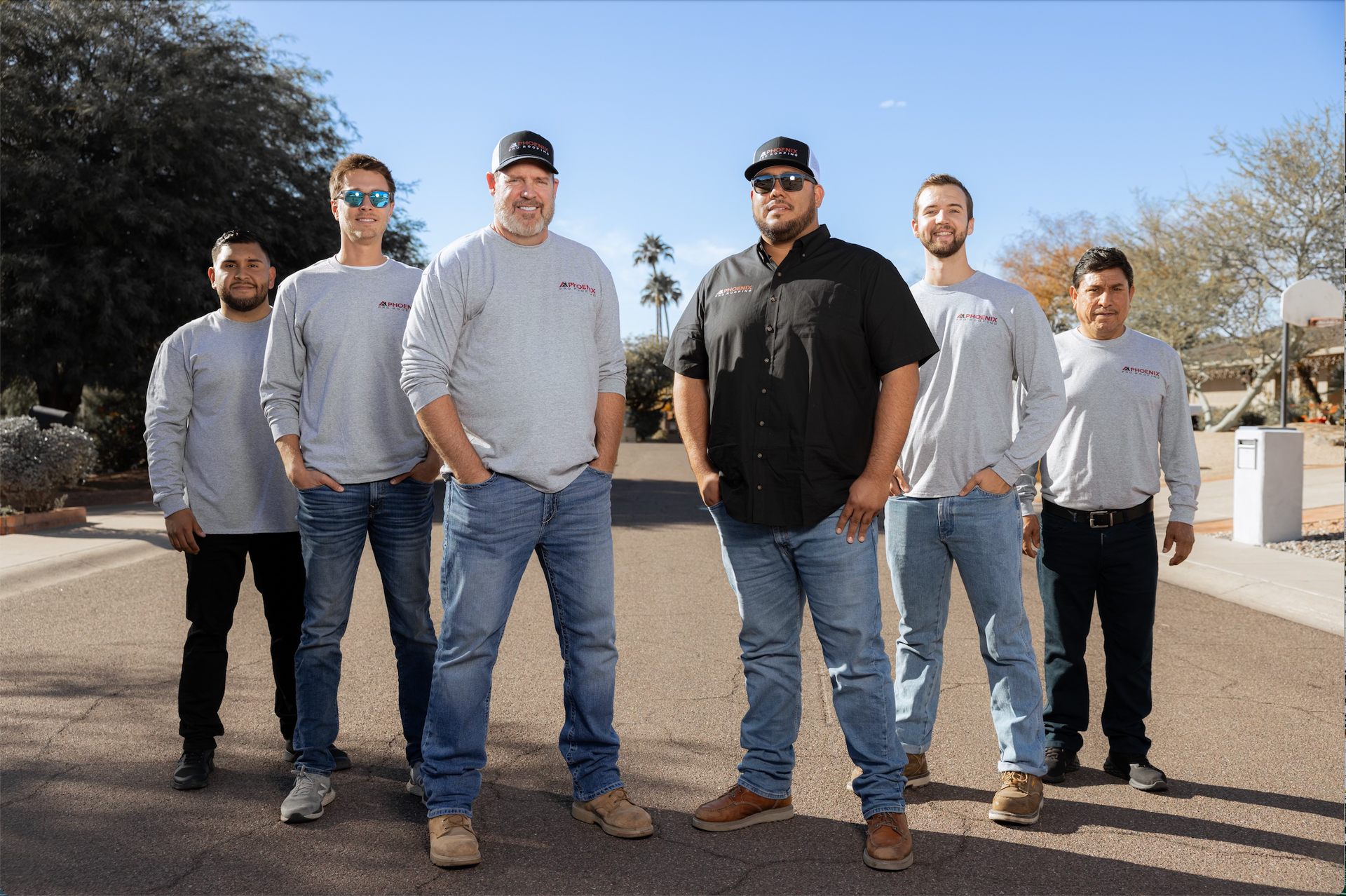
A roofing crew can pull up to a Fountain Hills hillside home and realize, before a single ladder comes off the truck, that the leak is only part of the job. The driveway may pitch hard enough to complicate staging. The lot may step down toward a wash. The roof may be visible not just from the street, but from a rear patio, a neighbor’s second-story deck, and half the slope across the way. On homes like these, roofers in Fountain Hills AZ are not just replacing underlayment or tracing leaks. They are working on one of the most visible architectural surfaces on the property, in a town where the roof often frames the whole house.
That is a big part of what makes Fountain Hills roofing different from the flatter, more standardized parts of the Valley. Many homes here sit on elevated lots, carry custom lines, and use tile roofs, flat roof sections, foam transitions, skylights, and layered elevations that punish sloppy work. A repair that might pass unnoticed elsewhere can stand out here from the curb and from the view side. A roofing contractor serving Fountain Hills has to think about appearance, access, wind exposure, and protection of the property all at once.
In Fountain Hills, the site plan affects the roof plan
A lot of roofing companies talk about materials first. In Fountain Hills, the smarter place to start is the lot itself. Hillside and elevated homes create a different sequence of decisions: where to stage debris, how to move materials without damaging pavers or decorative concrete, how to protect desert landscaping, and how to keep crews working safely on multi-level slopes and stepped roof planes.
Some homes in Fountain Hills AZ have long, narrow approaches with limited turning radius. Others back to open desert or sit above retaining walls where access from the rear is constrained. That changes the pace and structure of the roofing project. It can influence whether sections are completed in tighter phases, how tear-off is handled, and how a team protects view fencing, outdoor kitchens, smooth stucco, and coated patios below the work area. Good planning is not cosmetic here. It is the difference between a controlled project and a property-management headache.
A visible roof has to satisfy the house, the street, and the hillside
In many Fountain Hills neighborhoods, the roof is not a background system. It is part of the architecture people notice first. On a custom home with layered parapets, decorative tile bands, and broad rear exposures, the roof reads almost like an exterior finish. Color variation, tile profile, ridge lines, and the way repaired sections blend into older sections all matter more when the home is built to be seen from multiple angles.
That is why Fountain Hills roofing services often involve conversations that go beyond stopping leaks. Homeowners may be weighing whether a partial tile reset will look uneven from the street, whether a flat roof re coat will change reflectivity on the upper terraces, or whether a new roof section will visually fight with existing concrete tiles on the main house. In a market where presentation supports property value, roof replacement has an aesthetic burden as well as a structural one.
The market data reinforces that point. Fountain Hills is a small, highly owner-focused community with expensive homes and a homeowner base that tends to make long-range decisions instead of short-term patch choices.
That mix matters for roof maintenance and roof replacement. In a town with high owner occupancy and a median household income of $112,654, many customers are not looking for the cheapest possible patch. They are trying to protect a valuable asset, preserve the look of the house, and avoid a repair history that chips away at confidence every monsoon season. Fountain Hills roofers who understand that tend to communicate differently, estimate differently, and execute with more discipline.
HOA review and design expectations are part of the real job
Fountain Hills is not one uniform ruleset, but many neighborhoods do carry design expectations that affect roofing materials, colors, and profiles. Some homes are in communities where visible exterior changes trigger review. Others may not have formal HOA friction but still sit in streetscapes where a mismatched roof looks obvious immediately. Either way, roofing services here often involve more than selecting what is technically installable.
A roofing contractor may need to help a homeowner think through whether the tile profile matches the original intent of the house, whether a replacement underlayment and reset approach preserves the appearance they want, or whether a different material on a flat roof section will create a visual break at the transition lines. Even on homes without strict review, the expectation in Fountain Hills AZ is usually that repairs and replacement work should look deliberate, not improvised.
That design pressure is especially real in a community where many homes were built in eras associated with custom desert construction. A large share of the housing stock now sits in the age window where underlayment wear, flashing fatigue, and tile reset work become common.
Much of Fountain Hills was built during the custom-home growth decades when tile roofs, layered elevations, and desert-adapted roof forms became common.
That age profile is one reason complete roof replacements and re roof planning come up so often in Hills AZ. The visible tile may still have life, but the systems beneath it may not. On custom homes, the conversation is often about whether to reset and preserve, selectively replace, or move toward complete roof replacements that solve both performance and appearance at once.
Custom homes create failure points that tract-home roofing rarely has
A lot of Fountain Hills roofing work happens on houses that were never meant to be simple. Multi-level rooflines, decorative ridges, dead valleys, long transitions between tile and flat roof sections, skylights, view windows tucked near roof intersections, and additions built years after the initial installation all create seams where water and heat work differently.
That complexity changes how an experienced team approaches roof inspection and repairs. On a custom home, the stain in the hallway may not connect to the nearest visible issue. Water can travel around stepped framing, behind stucco terminations, or along transitions where one roofing system hands off to another. A quick patch at the obvious spot may buy a little time while the real entry point keeps working. Fountain Hills roofers have to quickly identify not only the symptom but the architecture behind it.
Tile roofs deserve special attention here. Tile roofs typically outlast the underlayment beneath them, which is why many Fountain Hills homes need more than minor repairs but less than a full change in roof style. Broken or slipped concrete tiles, fatigued flashings, underlayment failure in valleys, and movement around penetrations can all push a house toward a reset or major roof replacement even when the field tile still looks respectable. On some homes, mixed roofing types complicate that further: tile on the main slopes, flat roof foam or coating on upper decks or low-slope sections, and older tie-ins from remodels that do not age at the same pace.
This is also where local building codes matter. A roofing contractor serving Fountain Hills AZ has to understand not only the roofing industry standards for fastening and flashing, but the local building codes and practical permitting realities that affect custom reroof and replacement work. On elevated homes with exposure, edge securement and transition details are not a place to freelance.
Wind exposure feels different on ridgelines and open-facing lots
People talk about intense heat in Arizona because it is obvious. In Fountain Hills, wind exposure can be just as important, especially on homes that sit high, face open terrain, or catch gusts along ridgelines and cross-slopes. A house can have one elevation that bakes in direct sun and another that takes repeated pressure at eaves, ridges, and edge metal.
That combination affects fastener integrity, tile attachment, edge details, and the long-term performance of flat roof coating systems. On elevated properties in Hills AZ, the details at the perimeter of the roof often deserve more scrutiny than homeowners expect. A few loose concrete tiles near a visible edge may be the clue that movement is happening elsewhere. A coating that looks fine from the ground may be thinning at drainage paths or pulling at transitions where expansion and wind work together.
For that reason, a thorough inspection on a Fountain Hills house should pay close attention to:
- exposed hips, ridges, and perimeter attachments on tile roofs
- valley metal and underlayment condition on multi-level slopes
- foam and coating transitions on every flat roof section
- penetrations around skylights, vents, and rooftop equipment
- parapet caps, scuppers, and drainage exits on low-slope assemblies
- signs that previous minor repairs solved appearance but not movement
Those are not abstract checkboxes. They are the points where repairs either hold up or fail fast. After any list of concerns like this, the next step should be a real interpretation of what they mean on that specific house, not a canned sales script. On many Fountain Hills properties, the right answer is targeted roof repair in one zone and preventative maintenance in another, rather than treating the whole roof as one uniform system.
The property below the roof needs protection too
One of the easiest ways to tell whether a roofing company belongs on a Fountain Hills property is to watch how they talk about everything under the eaves. High-end homes here often have mature desert landscaping, specimen cacti, decorative boulders, travertine, paver drives, coated walkways, smooth stucco, custom metal gates, and outdoor living spaces positioned directly below the work area. A roofing project that ignores those finishes can leave a mark long after the new roof is installed.
Protecting the property is not an add-on. It is part of the craft. That means planning debris control, moving materials carefully, using staging that respects driveways and hardscape, and reducing unnecessary traffic over vulnerable areas. It also means thinking about the view side of the house, not just the street side. Patios, outdoor fireplaces, built-in grills, and pool-adjacent spaces are often where homeowners and guests actually experience the house. If the roof work leaves that side battered, dusty, or visibly scarred, the project did not really succeed.
This is one reason newer luxury and infill homes in Fountain Hills often demand a more detailed estimate and a more disciplined work plan. The value of the property is not only in square footage. It is in finish level, setting, and the relationship between the house and the lot.
That is why many customers comparing roofing companies in Fountain Hills AZ ask as many questions about jobsite behavior as they do about shingle or tile brand names. They want highest quality materials, yes, but they also want a team that understands how to work around expensive surroundings without turning the house into collateral damage.
Repair, replacement, and re roof decisions should follow the architecture
Once the site, appearance, and complexity issues are clear, then it makes sense to talk about service. Fountain Hills roofing services are most useful when they respond to the design of the house instead of forcing every home into the same menu.
Roof repair makes sense when the problem is genuinely localized: a leak at a penetration, cracked concrete tiles after wind movement, isolated flashing failure, or a coating defect on a limited flat roof section. Minor repairs can also be the right move for newer homes, especially where the initial installation is still within a reasonable life cycle and the issue is traceable to one detail rather than system-wide wear.
Roof replacement becomes the stronger option when the failures are layered. That may mean underlayment deterioration under broad tile areas, repeat leaks at multiple transitions, aging foam or coating on several low-slope sections, or a roof with enough staggered patch history that future repairs become guesswork. Complete roof replacements are especially worth discussing on custom homes where piecemeal work risks creating visual mismatch on a very visible structure. In Fountain Hills, replacement is often about restoring coherence as much as solving leaks.
A re roof decision can also show up in between those two poles. Homeowners sometimes have tile roofs with reusable field tile but worn-out paper, battens, flashings, or edge details beneath. In those cases, a re roof or tile reset strategy may preserve the character of the house while addressing the actual failure points. That is one of the more important distinctions in Fountain Hills roofing: the visible material is not always the material that failed.
Tile, foam, coating, and flat roof transitions need honest evaluation
Many Fountain Hills homes are not built with one simple roofing type. A house may have concrete tiles on the primary pitched areas, a flat roof over a garage or view wing, foam on a low-slope section, and coating over a prior system on a detached portion. Mixed assemblies are common enough that a roofing contractor has to be comfortable moving between roofing types without oversimplifying the estimate.
Tile roofs remain a major part of the local landscape because they fit the desert architecture, hold their look well, and support curb appeal. But tile alone does not tell the full story. The underlayment, flashings, and attachment details matter just as much. Flat roof sections deserve equal seriousness because they are often where drainage, ponding, and transition failures show up first. A flat roof in Fountain Hills may be small in area but major in consequence if it sits above a living area, a view window wall, or an expensive interior finish.
Foam and coating systems have a place here too, particularly where energy efficiency, seamless coverage, and low-slope performance matter. The key is evaluating whether a re coat will truly extend the life of the system or whether the substrate and details have deteriorated too far. Coating can be smart maintenance. It can also be false economy if used to hide deeper problems. The right team will say so.
Phoenix Pro Roofing handles Fountain Hills roofing services that include tile roof repair, roof replacement, complete roof replacements, flat roof service, foam and coating work, and targeted repairs for mixed roofing systems. The goal is not to force one product. It is to match the service to the actual roof.
Older owner-held homes and newer custom homes do not ask for the same solution
There are really at least two strong residential segments in Fountain Hills, and they create different roofing needs. Established hillside neighborhoods contain many houses from the 1970s through the 1990s, often on long-held lots with original or older roof assemblies now reaching major decision points. Newer luxury and infill homes, by contrast, may not need full replacement yet but still require careful inspection, selective repairs, and maintenance that respects premium materials and complex construction.
That split is useful because it keeps homeowners from hearing the same pitch no matter what kind of house they own.
For older custom homes, the likely concerns include underlayment age, flashing deterioration, valley wear, previous patch history, and whether tile roofs can be reset effectively. For newer homes, the focus may shift toward workmanship issues from the initial installation, localized storm or wind damage, flat roof coating performance, or preserving a newer appearance while addressing potential issues early.
Either way, the Fountain Hills community tends to reward careful work. Many properties are owner-occupied, many have been held for years, and many carry enough value that customer satisfaction depends on both performance and finish quality. That is different from a market driven by quick turnover.
A roof inspection here should answer visual questions, not just technical ones
A thorough inspection in Fountain Hills should absolutely look for leaks, damaged materials, underlayment wear, movement, and drainage trouble. But on this kind of housing stock, inspection should also answer design and appearance questions. Will a repair be visible from the front approach? Will replacement sections match the scale and tone of the house? Is the problem isolated to one roof plane or spread across several elevations with different exposures?
That broader inspection mindset is especially useful before complete roof replacements, before listing a house for sale, after a wind event, or when a seasonal owner returns to a property that has been sitting through intense heat and monsoon cycles. Roof maintenance here is partly about preserving function and partly about avoiding surprises on a house that shows every exterior decision clearly.
A good estimate should reflect that. It should explain what can be repaired, what should be monitored, and what is likely to return if only the most visible symptom is addressed. It should also spell out materials, staging assumptions, and what protection steps the team will take around the house. Homeowners in Fountain Hills AZ usually respond well to that kind of directness because it respects both the property and the customer.
Seasonal residents need maintenance on a calendar, not on a guess
Fountain Hills has a meaningful part-time and seasonal rhythm. Some homes are occupied year-round. Others have owners who split time, travel often, or return for part of the year. That changes how roof maintenance should be handled. A roof problem that develops while the house is quiet can become more expensive by the time someone notices interior staining, especially around skylights, low-slope sections, or transitions hidden from easy view.
For seasonal residents, regular maintenance should be planned rather than improvised. That can mean scheduling inspection before monsoon season, after major wind events, or before a return to the property after a long absence. It can mean documenting conditions on tile roofs and flat roof coating systems so small changes are visible over time. It can also mean making sure a trusted local team can respond if emergency tarping or urgent roof repair becomes necessary while the owner is away.
This is where a Fountain Hills roofing contractor earns trust quietly. Not through a dramatic pitch, but through consistency: clear photos, a thorough inspection, realistic maintenance intervals, and the ability to quickly identify whether an issue calls for minor repairs, a re coat, or a larger replacement conversation. For customers who are not always on site, that reliability matters as much as the install itself.
Fountain Hills roofing services for homes and select commercial properties
Most of the local demand is residential, and that is where much of the nuance lies: tile roofs, custom homes, flat roof sections, coatings, and roof replacement on highly visible properties. But commercial roofing services also matter in and around Fountain Hills, especially for small office, retail, association, and mixed-use buildings where low-slope roofing systems and coating cycles are part of long-term maintenance.
Commercial roofing services in Fountain Hills still benefit from the same discipline discussed above: protection of access and finishes, honest assessment of coating versus replacement, attention to edge details, and a plan that fits the building rather than the template. A small flat roof over a commercial suite can create just as much disruption as a large residential leak if the drainage and flashing details are neglected.
Phoenix Pro Roofing serves Fountain Hills roofing services for both residential and commercial needs, including roof repair, roof replacement, complete roof replacements, tile and flat roof work, foam, coating, and emergency response. The company’s tone fits the market well: straightforward, local to the greater Phoenix area, focused on quality, and built around customer satisfaction instead of high-pressure theatrics.
Why Phoenix Pro Roofing fits Fountain Hills without trying to flatten it into a standard suburb
Fountain Hills does not reward generic roofing. The homes are too visible, the lots too varied, and the expectations too high for that. A roofing contractor working here needs to understand hillside access, custom geometry, tile and flat roof transitions, HOA or design-review realities, and the practical importance of protecting expensive finishes during the job.
Phoenix Pro Roofing brings the kind of experience that helps in that setting: more than three decades in the roofing industry, a licensed, bonded, and insured team, work across residential and commercial roofing systems, and a company culture that leans hard on honesty, project management, and clear communication. That matters when customers are weighing roof repair against complete roof replacements, comparing top quality materials, or trying to preserve the architectural feel of a custom house in Fountain Hills AZ.
It also matters that the company understands the Valley climate without pretending every Valley city is the same. The Fountain Hills climate adds its own mix of intense heat, visibility, wind exposure, and hillside logistics. Homes here are often custom, view-oriented, and finish-sensitive. Roofing services have to reflect that reality.
A clear next step for a Fountain Hills roof
Whether the concern is a leak on a multi-level tile roof, aging underlayment beneath concrete tiles, a flat roof section that may need coating or replacement, or a house that simply feels due for a professional look, the next move should be a careful evaluation shaped by the property itself. Not every house in Fountain Hills needs a new roof. Not every recurring issue should stay in the repairs category either.
Phoenix Pro Roofing serves Fountain Hills AZ with roof inspection, roof repair, roof replacement, re roof planning, coating, and maintenance support built around the actual structure, the lot, and the expectations of the homeowner. If you want a free consultation and an estimate grounded in what your house really needs, the best place to start is with a thorough inspection and a conversation clear enough to make the next decision easier.